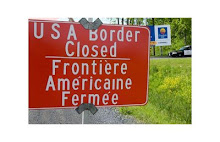
Monday, February 3, 2020


Saturday, March 5, 2016
Ethnic Cleansing; But By Who and For Who? The Farce of Blood Quantum Requirements!

A picture of hypocrisy: Ray Halbritter, slayer of Redskins and protector of Bluebloods.
Ironically, today blood quantum is not an imposed policy of the US government (although Canada still dictates enrollment criteria on many levels). It is an all too common policy of those Native peoples who have been reduced to "tribes, bands or nations of Indians subordinate to the United States" to punish, control, manipulate and eliminate their people by disenrollment or denied enrollment over pedigree. This has been driven by greed, entitlements and general abuse of power but leads to only one end; ours.
Many Native peoples have a range of methods to determining their identities, lineage and population. The Haudenosaunee and many others have a matrilineal system of identifying the distinction of peoples and family. The proverbial "you follow your mother" was the method to determine which clan and, specifically for the Haudenosaunee, which of the 49 families a person would identify as. This loose system is tens of thousands of years old and I say loose because the Haudenosaunee was always a culture of inclusion where adoption and absorption of peoples not physically born into these families was commonplace and a normal fact of life and would never be questioned.
But the "humanities" as determined by Greeks, Romans and Christians was built on hierarchies, class, and where individuals stood on the scales of civilization and human development. With Europeans came European ideas and influences. For the most part, the Haudenosaunee maintain the matrilineal system. Alienation has crept in other ways with the self righteous developing other means of exclusion but on blood quantum the Oneidas under the rule of their BIA recognized supreme leader Ray Halbritter stand alone.
Halbritter used some of the influential Onondaga icons to seize power as the sole leader of the "Oneida Indian Nation (OIN) of New York" back in the late 1980s. He then rewrote Oneida customs by crafting his official enrollment list of Oneidas (that list includes "Oneidas in good standing" and those who aren't). Along with his new list was his new list of enrollment requirements which include…, you guessed it, blood quantum.
Halbritter's ascendency to the OIN throne came with enough Onondaga Faithkeeper Lyons bidding that a complete departure from "tradition" would have looked bad so he kept a matrilineal component but put a blood quantum requirement of "Indian" blood at a minimum of 25%. Now some would say that is reasonable and, of course, IT IS NOT for a variety of reasons that will ultimately haunt all those who do such a thing but there are several problems with Ray's quarters. According to the unwritten OIN rulebook "Indian blood" can only come from a "federally recognized tribe." So in spite of the fact that more Haudenosaunee live north of the imaginary line between the US and Canada, NO Native ancestry counts for Halbritter's OIN. Of course, all of the non Fed Wrecked Native peoples are also not OIN recognized either.
Now add on to this arbitrary system of exclusion; politics, prejudice and "bad blood" and Oneida enrollment is just a game; a rigged game with bad consequences. Halbritter bursts on to the national stage as the "Redskin" slayer in a feeble attempt overshadow his failed handling of land claims, land title, gaming revenue and taxation while playing ethnic cleanser with his own version of "Bluebloods." There you go, Daniel Snyder, a name Halbritter would have to endorse.
Being Native is not about skin color or blood quantum. It is about being a people. It is about relationships, shared culture, language and distinction. While many Native people are concerned about loss of identity, rating each other by blood quantum is a fool's game. Dictating who the good Oneidas are and who the bad ones are or what is a "good Indian" forgets what Sheridan and so many others said: "The only good Indian is a dead Indian."

Tuesday, June 10, 2014
WHITIE Compliant? You are Kidding, Right?

On June 2, 2014, every "member" of the Seneca
Nation of Indians (SNI) received a letter from his/her President announcing the
launch of the Seneca Nation's new Enhanced Tribal Identification Card (ETC)
program. The announcement of the program was couched in terms of preventing
terrorism, strengthening border security and facilitating ease of border crossing/travel
as well promoting a partnership between the SNI and the U.S. Department of
Homeland Security (DHS) through their Memorandum
of Agreement (MOA).
The letter begins with the declaration that "the Western
Hemisphere Travel Initiative (WHTI) requires U.S. and Canadian travelers,
including Seneca Nation members, to present a passport or other WHTI-approved
document that denotes identity and citizenship when entering the U.S. at land
or sea borders while traveling within the western hemisphere."
Well let's clear up a few things right from the start. They
say WHTI, I say WHITIE. And in spite of this letter's contention that these
WHITIE-compliant ETCs are designed to "continue the protection of our
sovereign rights," this could not be farther from the truth. This WHITIE requirement
is a violation of the UN Declaration on Human Rights, the UN Declaration on the
Rights of Indigenous Peoples and a direct abrogation on our sovereignty, as
well as a violation of our inherent rights and laws of nature. Note that I didn't
even bother to bring up their BS, double-talking, land stealing treaties.
There are almost too many problems with this thing to cover
it here, despite the fact there are really only five requirements for WHITIE
compliance. But before I get into those, let me hit a few huge shortcomings of
these cards and problems with the program. First, although it is stated pretty
clearly, it’s easy to overlook the most obvious flaw — this will not help with
travel into Canada or any place else. The WHITIE documents are for
"entering the U.S...." The SNI Application for an ETC says it even
more clearly — "An ETC can be used...to
return to the U.S. from Canada, Mexico and some countries in the Caribbean at
land/sea border entries. However, Canada will not accept an ETC...to enter into
Canada." So these things are
not for traveling from home. They are only to prevent DHS from denying our return.
The SNI application has significant violations of privacy and
goes well beyond basic identification information:
FULL LEGAL NAME,
GENDER, HEIGHT, AGE, DOB, PLACE OF BIRTH, SSN, TRIBAL ENROLLMENT NO., CLAN,
PASSPORT #, HOME PHONE, MOBILE, WORK, PHYSICAL ADDRESS, MAILING ADDRESS, MARITAL
STATUS, MOTHER'S MAIDEN NAME, LEGAL NAME OF FATHER, WERE THEY LEGALLY MARRIED?,
CHILDHOOD RESIDENCE, EMPLOYED?, EMPLOYER'S NAME, ADDRESS, PHONE, LEVEL OF
EDUCATION, COLLEGE(S) ATTENDED, DEGREE(S)/YEAR(S), CAN YOU READ AND WRITE
ENGLISH?
The applicant also has to sign a Confidentiality Statement
that acknowledges "legal penalties associated with... providing false
information" yet is provided no confidentiality agreement from the SNI,
DHS, U.S. Customs and Border Protection or whoever the WHITIE guys are. In fact
the MOA doesn't even detail the use of this information but rather only
mentions "validation of the Seneca Nation ETC information as specified in
the separate service level agreement developed between the parties."
These are among some of the issues that jump off the pages of
these documents without even getting into the WHITIE requirements. An
expiration date seems benign enough but "mandatory facial image
capture" sounds a little creepy. This is for compatibility with federal
facial recognition programs and databases. The fact that, according to the MOA,
the SNI clerk will retain this "capture" even if no card is issued
just adds to the creepiness. Beyond basic requirements for counterfeit protection
these WHITIE cards are required to have a Machine Readable Zone (MRZ) utilizing
Optical Character Recognition technology and an RFID chip that will allow
"unique identifiers" to be acquired; in the case of the RFID chip,
without the card ever having to come out of your pocket. These Unique
Identifiers will include digital photographs and other personal information and
can be acquired by readers merely in your vicinity.
But clearly the kicker in this whole program is the U.S. or
Canadian citizenship requirement. The applicant MUST provide proof of "recognized
U.S. or Canadian citizenship to be approved and the WHITIE card must display
that citizenship prominently on its face. This requirement is essentially
tantamount to saying to any of us that if we manage to step over one of the
imaginary lines of the U.S. that we cannot return without a declaration of
citizenship to the U.S. or Canada.
This clearly is not an oversight. In fact, in the SNI ETC
Application the first note under the "PROOF
OF "RECOGNIZED" U.S. OR CANADIAN CITIZENSHIP" is: *Note
that in submitting evidence of "recognized U.S. citizenship", the ETC
applicant is not admitting to/accepting U.S. or Canadian citizenship and is
first and foremost a citizen of the Seneca Nation."
Well that fixes everything. NOT! Now what member of the SNI
legal team thought that adding this note in the application would negate the
obvious implication of the WHITIE requirement? The MOA clearly states that
"Nation staff shall in every case confirm that the applicant is recognized
as a U.S. or Canadian citizen." *Note that it does not say that the
applicant may qualify for U.S. or Canadian citizenship or meet to requirements
for such. Again, this is not just a requirement for getting a WHITIE
card but it's a requirement that it is actually stated on the WHITIE card.
I can't help but interpret this buried and anything but a
legitimate disclaimer as an attempt to dupe the applicant. This is just
devious. This is not a statement promulgated by the Seneca Nation to the U.S. State
Department or anyone who would ever see these ETCs. And it certainly won't be
among the card's "Unique Identifiers" broadcasting from their RFID
chips. Where were these legal wizards, who clearly saw the problem, with their
challenges to WHITIE in the first place? Where was just one of these overpriced
consultants when these fear mongering, 9-11 obsessed, opportunistic WHITIE supremacists
put these racist requirements together? No nation can de-nationalize another or
force their citizenship upon a non-consenting people. These WHITIE cards are
not Seneca Nation identification cards. They are federal IDs with tribal logos
and enrollment numbers.
We need to resist these WHITIE cards. The SNI boasts, in bold
print in the letters addressed to "Dear Seneca Nation Member," (not
Citizen), The Seneca Nation is just the
third Indian tribe in the country to issue ETCs. In almost 5 years since
this latest attempt at forced assimilation, only two other "Indian
tribes" were gullible enough to go through with this?
Well, let's hope the Seneca people, the Onondowaka, are
smarter than their administration lawyers are or at least smarter than their
lawyers think they are.
Monday, June 9, 2014
The Land of the Free and the Home of the Brave (Oh yeah, Americans and Canadians live there, too)

"Like the miner's canary, the Indian marks the shift
from fresh air to poison gas in our political atmosphere; and our treatment of
Indians, even more than our treatment of other minorities, reflects the rise
and fall in our democratic faith." — Felix S. Cohen, 1953
There is little
question that what the white man found when he washed up on our shores was a
free and fearless people. But rather than learn our ways and study how a people
could live without kings, queens, courts and prisons or slavery, discrimination
and class warfare; the church — the very thing that created many of these institutions
and practices — was relied upon to spread all of this to a free world.
The Doctrine of
Christian Discovery, which has plenty of foundation in the Bible, got its first
shot as a stand-alone church doctrine with Portugal's invasion of West Africa
in the mid-15th century. A pope's decree that a Christian nation
could claim the lands and possessions of a pagan people and reduce them to "perpetual
servitude" would begin four centuries of the African slave trade. In 1493,
another pope would lay the foundation for all "Christian nations" to
begin the rape of our own Turtle Island and secure the racist Doctrine of
Christian Discovery as the law of the white man. In fact, it would be called the
"White Man's Burden."
Certainly, bits and
pieces of our cultures, philosophies and traditions were borrowed when the need
to shift colonial powers and authority would arise. But what was woven into the
American fabric was only done so in rhetoric and not in practice. Laws of
Nature, all created equal, governance by consent of the governed, inalienable rights
to life, liberty and the pursuit of happiness; these not only sounded good,
they were good. These along with the concept that individuals would be placed
in the service of their people rather than as lords over them were, in fact,
the way of our people, a way that allowed our people to thrive for thousands of
years.
"The most consistent theme in the
descriptions penned about the New World was amazement at the Indians’ personal
liberty, in particular their freedom from rulers and from social classes based
on ownership of property. For the first time the French and the British became
aware of the possibility of living in social harmony and prosperity without the
rule of a king." — Jack Weatherford, Indian
Givers: How the Indians of the Americas Changed the World, 1988.
As the fake American history crumbles with
more access to truth and our abilities to tell our own truths, many have begun
to learn about the atrocities of the 500 years of the American Holocaust. And
while acknowledgement of the wrongs and perhaps some attempts to right them is
a good place to start, what's missed in all this is Felix Cohen’s warning.
One thing about Cohen's analogy of us to the miner's canary
was that it was not about saving the canary. It was about saving the miners. It is the
white man with his "burden" and all that Cohen was warning of. It is
more than just an analogy to suggest that the atrocities committed against our
people paved the way for the poison gases of Auschwitz and those now affecting
climate change. Raping our children and our women are crimes against humanity
but raping our Mother Earth is a crime against Creation. And it's not just all
of man that will be affected but all of creation. But let's be honest, most of
Creation will not care less about toppled buildings, crumbled roads and flooded
homes. Only man — with his attempt to defy nature — is in real trouble when
nature strikes back.
Cohen realized that in our people — the
treatment of and relationships with us — lay a barometer for mankind. The fall
in the white man's "democratic faith" was based on an ignorant
majority that could see its way to unspeakable crimes against the people
closest to Creation and never realize that what kills the canary also kills the
miner.
But, in reality, we are still free. It is
the white man that fell to Christendom, with emphasis on the "dom" or
domination. We have lost an inconceivable number of our people over five
centuries to extermination, removal, assimilation and termination. We are still
losing loved ones to poverty, alcohol, drugs and suicide. And we continue to
lose many to assimilation, including those finding comfort in the colonial
systems that continue to oppress our people. But we are not all lost.
There are many among us that continue to say the Ohenton Karihwatehkwen.
We acknowledge our relationship to Creation and bow to no man. We know we are
free because our minds are free. We are not the caged canaries of the white man.
We are a free people. And while many bound within the colonial systems poke
those of our people, who were willing or succumbed to be their canaries, with
their sticks, and begin to question their own fate, more and more will look to
the free and the brave and desire to be among us. They'll pray that we are not
those "merciless savages" Thomas Jefferson wrote about and that we
still hold certain truths to be self-evident — even if they could not.
Friday, May 30, 2014
50 Senators to the Rescue

The UN Permanent Forum on Indigenous Issues (UNPFII) wrapped
up its 13th session this week. Thousands of representatives of UN member
states, non-governmental organizations (NGOs) and Indigenous Peoples
Organizations (IPOs) as well approved participants from academia and the media.
The latter was how I got in. For two weeks hundreds of speakers offered
statements and interventions, many of them from the Native people of Turtle
Island.
These interventions offered a full range of complaints
against Canada and the U.S. on issues including murdered and missing women,
environmental crimes, land claims, land use, poverty and prominent racist
policies very much still in full effect, including the Doctrine of Christian
Discovery and the wholesale whitewashing of our children through the adoption
agencies and policies of both countries. There was plenty of recounting of the
past but for the most part all the issues were contemporary. Today! Now!
UN member states, such as the U.S., Canada and many more, had
representatives present. Those representatives had names you will never know,
offering statements not worth repeating that amounted to little more than lip
service to a UN event and focus that some countries wish didn't exist. No
elected officials showed in New York; no senators or members of Congress, no ambassadors
and certainly no one who really needed to hear directly from Native voices in
an international forum.
Now this is not to say that members of, perhaps, the most
dysfunctional Congress in the history of the United States weren't making news
on the BIG issues. No, in fact, as participants at the UNPFII were hammering
out strategies on how to implement the UN Declaration on the Rights of
Indigenous Peoples (UNDRIP) — essentially how to hold nation states to this
minimum international standard — 50 United States senators decided to cut a
page out of the New York Oneida Ray Halbritter's playbook.
These 50 senators — who I am sure were absolutely oblivious
to the UNDRIP, the Permanent Forum and, most certainly, the Doctrine of
Christian Discovery — decided to pull a publicity stunt to distract from their
own failings. In about as partisan an act as possible, 50 Democratic senators
decided to lend their names to a letter that attempts to correct what they view
as "a matter of tribal sovereignty." I know, this sounds serious,
right? And if I stop right here, you have got to be thinking, alright, they're
scolding the states for violating our sovereignty or the tax department for
unlawfully trying to fleece our people and businesses or even the State Department
over passports or IDs. You might even be thinking they are admitting their
failure to address land claims or correct any number of the other racist
policies being addressed right then at the United Nations. But you'd be wrong.
No, these 50 elite politicians sent a letter to the NFL. And
unlike Mr. Halbritter who bought his way into this 30-year debate over the
Washington D.C. football team name, these guys just had a staffer stamp their name
on a letter to NFL Commissioner Roger Goodell. But again unlike Mr. Halbritter,
who quite successfully deflected all attention from his "leadership",
including his destruction of the Oneida land claim and selling out to New York
State on gaming, tobacco, fuel and taxes by transforming himself into the
"Washington R-word" slayer, these guys not only hurt the cause with lending
their dismal approval rating to it, but they also come across as somewhere
between hypocritical and just plain silly.
First of all, why only 50? Why would the Democrats not ask a
single Republican to sign? This just lends itself to the notion that it was a
political stunt. Next, of course, is the timing. How could they ignore all that
was happening and being discussed in New York at the UNPFII only to join in on what
to call a bunch of men in tights? Another issue is the letter itself and the
complete lack of responsibility these senators have for the U.S. having to tip
toe around the UN Declaration on the Rights of Indigenous Peoples. Step up.
Read the damn thing! And stop violating it!
The letter also seems to ignore the fact that the team’s name
has always been a racial slur. It was as racist 80 years ago as it is today.
This gang of 50 suggests that because a racist NBA team owner recently got
taken to the woodshed for being caught on tape saying very disturbing comments
about black people, that it is now time
for the Washington football team to abandon its racial slur moniker. It's
almost as though the team name has just gotten noticed. Must be all that Oneida
money. They could have at least been a little more honest and said that in
light of the L.A. Clippers owner Donald Sterling’s crime and punishment that
they can no longer continue to ignore the team name for the nation's capital.
The letter states, "This is a matter of tribal
sovereignty." No, it's not! This name and all use of Native mascots and
images are racist. It is not a violation of sovereignty. The state and federal
governments do that — not sports teams. It is insulting and perhaps even a
crime. If someone carries a likeness of RGIII's head in a noose into a football
stadium, I could see someone catching a hate crime charge but the Philadelphia
fan that takes an impaled "Indian head" to Washington football games
and Chicago hockey games actually gets praised and put on TV. But even if it is
a crime or a civil rights violation it is not a "matter of tribal
sovereignty." That just tells me, again, how clueless these 50 senators
are.
This letter also attempts to cast the Congress in stark
contrast to the NFL which supports this racist slur by listing the great
protections that the Congress has legislated for us. They seem to forget that
every law they cited was to counter racist governmental policy and actually
continues it by creating federal regulations for this "protection"
rather than ever really recognizing our sovereignty. That is, by the way,
"a matter of tribal sovereignty."
I agree with these senators that this team name should be
changed and, in fact, all use of Native mascots should end. This all comes from
the specific racism held against Native people and it is certainly emblematic
of the racist policies of state and federal governments. But perhaps the
Washington football team should keep the name, if only to demonstrate the
blatant evidence of the racism that Washington D.C. — the nation's capital — still
holds toward Native people.
A lot more than just a football team name needs to change in
Washington. Respect Native sovereignty and stop the policies of assimilation.
Oh, yeah. And change the name.
Wednesday, May 21, 2014
We love what you've done with the place!

After spending the week in
New York City attending the United Nations Permanent Forum on Indigenous Issues
and listening to dozens of speakers offering their interventions to the nearly
2,000 delegates and representatives, I have heard asked repeatedly a few
burning questions.
The first is: “What do want
from the UN or the international community?” Well, that's a loaded question
because there is what we want and what
we expect. Plain and simple, many
want action. For me, I come back to the warning about being careful what you
wish for. I just want some attention paid to our issues and to shame those
nations that continue to commit acts of genocide against us — plain and simple.
My expectations are low for
anything to have much in the way of fast results. Death may be quick but
survival is slow, particularly if we are talking about the survival of an
entire people and simply not a generation of them. I give less credit and
authority to those who are touted as leaders. I see this stage as an
opportunity to produce credible testimony to impact the court of public opinion
more than heads of state.
The speakers were from across
the globe but the messages were repeated over and over again — loss of land,
assimilation, abuse of women, health, poverty and environment. Land claims and
environmental protections are the issues that concern the colonial powers most
because these directly affect their bottom line as it relates to their
economies. So the second question that is quick to be asked by the mainstream
media is: “What do you want to see come from land claims settlements? This
question is quickly followed up by: “Surely you don't want all the land back
after all this time? Do you?”
Some of the Indigenous
people are quick to respond, "Oh, no. We wouldn't do that to you!"
But they never quite get around to answering just what they would like to see
as a resolution to long-standing battles over land. In 1922, the Chairman of
the New York State Indian Commission, Edward Everett, wrote in his report to
the State Legislature of the unlikelihood that Native people would have ever
shared lands had we known what the white man would do with it.
Ninety-two years later, as
we observe economic collapse, aged or decrepit infrastructure and man-induced
climate change, all I can say is that we love what you have done with the
place. And this goes to the heart of another question: “What would we do with title to lost lands?” My answer
begins with another question; this one to the people living and/or working on
our lands. “How are you doing under state and federal oversight? Over taxed?
Roads and schools in the crapper? Unemployment? Environment? How is that
working for you?"
Considering the bleak
outlook for even the immediate future, I would not shy away from the assertion
of Native stewardship and sovereignty on much of this conflicted land. But the
fact of the matter is that many of our people never quite get past the racial
bias at the core of the Doctrine of Christian Discovery. And even with
repudiation and clear condemnation from the international community, this
remains at the foundation of U.S. and Canadian "Indian law" and is
still being used by courts today. With no clear path for reclamation, most of
our people never look that far down the road and certainly never develop comprehensive
land use plans. Perhaps a higher level of discontent with the state and feds
will pave the way for the "clean slate" approach to land use and just
one or two examples of business success stories and higher quality of life,
would certainly change the conversation. But these can't happen if we don't
really have a vision for our future.
If one thing is learned from
hearing so much testimony on Indigenous issues, it is that capitalism and
imperialism got it wrong and buying into their failed systems for modeling our
own is just absurd. We need to assert our presence, fight for our regulatory
advantages and market these as building blocks to regional development.
I am extremely disappointed
to say that no one brought up trade and commerce as a specific area of concern
for this world stage. Not one Native voice took the opportunity to cite the
articles of the UN Declaration of the Rights of Indigenous Peoples that
specifically support our inherent rights to trade, commerce and our own
economic development. The absence of that conversation only adds to the
question as to what we are there for. If not there, where? If not then, when?
Minister of Human Rights
Purifacione Quisinbine told me more than 20 years ago at the UN that we needed
trade relations. That, she said, was the expression of sovereignty. She, like
me, viewed treaties as weak, one-sided documents. Contracts and invoices
represented equitability and it establishes relationships, not just between
governments but also between peoples.
Many good and important
issues got well warranted attention on this world stage but the real life
impacts to local and global economies caused by racist dogma cannot and should
not be down played. Two weeks, once a year with a few more annual events thrown
in is not enough to affect change. These issues have to be a drumbeat that
becomes deafening with international attention and takes full advantage of the
media attention that comes with it.
Our small corners of the
once vast lands which we tend to, need to be a reminders to all those who are
growing discontented with their lives — of what once was. We really don't like what
you've done with the place.
Thursday, May 15, 2014
Education and Conscience Versus Institutionalized Racism

Well, now that everyone can feel better about their battle and stance on unacceptable racism in the wake of giving the old "what's for" to Donald Sterling, the racist owner of the NBA's Los Angeles Clippers, we can all go back to settling in with the institutional racism that keeps Daniel Snyder, the equally racist owner of the NFL's Washington R-word, warm and safe at night. I know "spic,” "wetback,” chink" and the R-word still can appear in print but if the N-word can't, then, in my book either can the R-word.
Of course, it is institutional racism — the team, its logo, merchandise and name are trademark-protected, NFL-licensed and owned by a white guy. Not to mention the fact that most Americans are perfectly comfortable with the NFL franchise in their nation's capital bearing a racial slur for a name.
Now I won’t go off on another rant about how the dictionary defines the word or its history or even the damage the use of the word does to our youth. The simple truth is that a significant number of Native people are offended by it, yet most Americans are only offended by the fact that we are offended. That is to say, how dare we be offended by tens of thousands of mostly white people in red face, feathers, war paint, “costumes” and in an alcoholic stupor making a mockery of Native people? Not only is it not just this team or even just this sport. It's several teams in almost all sports. And it's not just the fans that are offensive. The opponents, sportswriters and TV producers can't resist the clichés or most outrageous comments or visuals. The Eagle's fan that brings the knife-impaled Indian head to the Washington games with “Red-Skin, Dead-Skin” written on the face, comes to mind.
But that's not the really bad part. Granted, this is all plenty offensive and SHOULD disturb more than just a number of Native people but that is not my ultimate problem with institutional racism. A team name or a mascot may seem trivial but what it really represents is the notion that a dominant society can appropriate a name or an image or even a racial slur against a people and normalize it in that culture.
The first impulse is to suggest this misappropriation "honors" us. Of course, that falls flat the moment we claim that we don't feel honored or that we are insulted by it. Then we are told that it's just a team name and that it is NOT meant to represent us. The best part is when they tell us that we aren't those people anyway — that we are no longer those "grand kings of the forests and the plains." I have heard Native people criticizing the mascot issue told to “go back to the reservation and drink a few.” Some honor, huh?
This acceptance of appropriating an image and then attempting to separate the affected people from it has consequences. It allows racist laws, policies and actions to continue year after year, decade after decade and century after century with no guilt and no real consequence to the dominant culture but with devastating impact on the affected people. Poverty, depression, suicide, alcoholism and little hope or prospect for the future is not caused by mascots. That's ridiculous! It's caused by the underlying racism.
You might ask how can this be? Where does racism become institutionalized or normalized? The simple answer starts with the church. The Doctrine of Christian Discovery established the idea that a Christian people could claim the lands and possessions of pagan people, that a “godless” people could be subjugated to slavery and ownership. The courts, including the U.S. Supreme Court then codifies this concept into U.S. law and equates discovery with conquest. The establishment of the "ward-custodian" relationship draws a straight line from 15th-century popes to 19th-century judges. And when racism is both entrenched in church and legal doctrine that IS institutional racism.
This institutional racism accepts racist mascots, team names and logos. And this racism is government driven and societally acceptable. The notion that the dominant society owns us; and that the once proud, brave, free and noble savage is gone, sucked into American history, has become the false narrative that is American history. And what are left is a people deemed wards of the state and barely a resemblance to what America now claims for naming their weapons and sports teams.
And what do wards of the state need? Obviously, just welfare, a check or a budget line. Wards of the state don't need an economy, they don't need opportunity and they certainly don't need United Nations protection. Not in the good ole USA or in Oh Canada.
Well, that's not the way we see it and, interestingly enough, neither does the rest of the world. After half a millennium of our resistance to racist church dogma and court bigotry the United Nations declared to the world in 2007 that:
"all doctrines, policies and practices based on or advocating superiority of peoples or individuals on the basis of national origin or racial, religious, ethnic or cultural differences are racist, scientifically false, legally invalid, morally condemnable and socially unjust."
The United Nations Declaration on the Rights of Indigenous Peoples (UNDRIP) also includes 46 articles that form the minimum standard the member nations insist should be respected.
So while American and Canadian societies hang on to the last vestiges of their state-sponsored racism, even as they declare themselves morally superior to the rest of the world, they remain clueless to the social advances all around them.
We are not wards of the state. We have asserted our distinction, our rights and our sovereignty as we have begun to rebuild our economies. We fight for our lands and our resources. We have brought back our cultures and languages from the brink of extinction from acts of genocide and we are protecting the planet. We always knew we were right and had the right to do these things and now the rest of the world agrees with us. We know this fight is ours and it is a battle of education. But perhaps with international pressure we can open some minds.
Racism is ignorance. Mascots are racist and, more importantly, so are the policies that discriminate against and hold Native people down.
I believe Native mascots and team names must go but the racist policies are a bigger issue for me. I'd rather use the absurd racism that everyone sees to shine a light on what is hidden in plain sight. The singular concentration by some on mascots makes us seem shallow and superficial. And the worse thing that could happen would be for us to lose the battle to educate and enlighten people about racism yet force a name change or a ban on mascots leaving the dominant society and their leadership more entrenched in the racism with their harmful policies more firmly intact.
Today, both the U.S. and Canada are actively waging a campaign of forced assimilation against Native people in direct violation of the UNDRIP. Canada's Bill C-10 and various U.S. state and federal laws, regulations and policies are attempting to criminalize our trade and our people. Protecting our women and children and creating a future for our people require that we protect our land, assert our sovereignty and create hope and opportunity now and for the future.
I, for one, am prepared to use the UN or any international stage whenever possible to garner support and shame, if necessary, the U.S. and Canada into change. And who knows? Maybe we'll knock off an "R-word".
Wednesday, May 7, 2014
Lucky 13 for the UNPFII

On May 12, the United Nations Permanent Forum on Indigenous
Issues (UNPFII) will begin its 13th session at the United Nations in New York
City. The session will run for two weeks and cover a broad range of topics.
The event is not open to the public. Only confirmed and
registered NGO and IPO representatives are allowed to participate. However, as
a UN accredited member of the media, I will be there, too. Yeah, that's right.
Two Row Times columnist and radio show host John Kane will be there having the
conversations that may or may not be welcome.
Now I'm not among the starry-eyed devotees of the UN. I am a
skeptic although I appreciate the good intentions of such a body and even the
nice words assembled in the UN Declaration on the Rights of Indigenous Peoples
(UNDRIP). But intentions are not actions and the UNDRIP clearly identifies
itself as the minimum standards that the world holds for the rights of Indigenous
peoples. And while I understand the most common denominator for the nations of
the world would almost have to accept a minimum standard, this Mohawk certainly
doesn't.
Of course, the U.S. and Canada, the last UN nations to
conditionally endorse the Declaration, could not even accept this minimum
standard at face value but rather suggested they could only support the "aspirations"
of the document provided that its articles do not conflict with U.S. or
Canadian law, which kind of misses the point. Uh...if your laws conflict with
the UNDRIP, which they certainly do, as well as your policies, propaganda,
altered history, religions, schools and state sponsored racism, then you
obviously are not really supporting what the rest of entire world has endorsed.
So why go? Simple. Shame.
I have made it my mission to encourage conversations on
Native issues. The more conversations that are had, the brighter the spotlight
shines on those issues. If it is nothing else, I see the UN as a grand stage
for conversations. But because the U.S. and Canada fail miserably by almost any
standard for compliance with the UNDRIP and because they have no intentions of
complying, our best recourse is the "court of public opinion" and
shame on that grand stage.
One of the biggest mistakes we make in fighting for our
inherent rights is treating them as gifts from our oppressors. Our rights are
neither "treaty rights" nor are they UN Declaration rights. They are
unalienable, inherent and original. Treaties may acknowledge them or even
suggest protection of them but they do not grant them. The UNDRIP makes no claim
to be the origins of our rights either. This declaration simply reiterates much
of the UN Declaration on Human Rights with certain other obvious international
standards such as "free, prior and informed consent" from people
affected by the actions of another. The UNDRIP recognizes rights. It does not
establish them.
Our job begins with asserting our inalienable rights based on
our inherent sovereignty. The language in their treaties may be used to
demonstrate and remind those that would violate our rights how many times they
acknowledged their limitations and just how little we ever really ceded to them
regarding our rights and liberties. The same goes for the UNDRIP. But unlike
all those treaties that our people were coerced into, for access to our lands,
the Declaration is not a quid pro quo
or a this for a that. It is simply a minimum standard. But it is pointless if
it is unknown or never cited.
So while our job begins with asserting our rights, it is also
incredibly important to specifically cite how and where our rights are being
violated within the context of the UNDRIP and our inherent sovereignty. We need
to make the violators of those rights painfully clear of the international
standards they are ignoring and alert the international community of the
violations and impacts, as well. There are 46 articles and a preamble loaded
with affirmations, acknowledgements, concerns, beliefs and specific points of
recognition to which we should hold the non-Native governments and do so with
every intent of leveling shame and embarrassment on these U.S. and Canadian hypocrites.
The opening day of the UNPFII, among other issues, is
scheduled to cover sexual health and reproductive rights. With more than 1,000
missing and murdered Native women in Canada alone and the highest rate of
childbirth mortality rates on the continent, how can the U.S. and Canada not be
shamed?
The second day will focus on the impacts of the Doctrine of
Christian Discovery. This can't be just a study of past atrocities but must
include the ongoing ones, as well. The U.S. codified this racist doctrine in
1823 and it is still cited to this day to diminish everything from claims to
our stolen lands to our right to trade and develop our own economies. This
can't just be about condemning ugly history as though it's all better now. It
isn't! The suggestion that our "discovery" by Christian nations
equated to conquest is not just wrong today. It was just as wrong when the
house of cards that is "federal Indian law" was built on it then. The
UNDRIP should assist us in securing more equitable remedies, not just for past
grievances but current conflicts, too. The U.S. and Canada can keep their
"houses of cards" but if they don't want it toppled they should keep
us out of it. There is no shame in fairly and respectfully resolving conflict
but any nation claiming superiority based on race or religion should be truly
embarrassed.
Redress, land disputes and land claims, Indigenous children
and Indigenous youth, and actual implementation of the UNDRIP are other
scheduled topics for discussion. And I will take every opportunity I can to
bend the ear of anyone that will listen to address the most critical issues to
our people — poverty today and bleak prospects for the future.
All the access to sacred sites in the world can't fix poverty
and self-esteem. All the special days, decades and declarations the world over
will not secure a future for our unborn faces. We don't need world courts or
international sanctions. We need real international relations that support our
trade, our travel and our autonomy. We need interface between the voices that
call for our right to be respected and protected, and those whose laws fly in
the face of those calls.
Let's see what a little "Let's Talk Native...with John Kane" at the UN stirs up.
No Honor Among Thieves or Chiefs
I have to begin my column this week by stating up front that
I am Haudenosaunee. I support traditional governance based on the Kaianerehkowa
and a culture grounded with the Ohenton Karihwatehkwen (Words Before All Else)
and the Tiohateh (the Two Row Wampum). I must emphasize that it is traditional
governance I support rather than "traditional government."
There are those who would suggest that the Haudenosaunee have
existed with all these things firmly in place in an unbroken testament to our
strength and durability as a people. I wish that were true. I wish our people
had continued to reject the Bible and the booze. I wish they always held our
women in the reverence that we like to claim. I wish we protected and preserved
our lands and language for our future generations. I wish we maintained the
concepts of governance by the people and the understanding that people who were
recognized for the best characteristics were placed as honorable servants to
their people rather than rulers placed above them. But most of these wishes
would bring me back several hundred years.
We lost our way several times long before the first white man
ever appeared before us. Our Thanksgivings are reminders of those times and of
the time we came back together to right ourselves. The Kaianerehkowa represents
the last time wise men among us reminded us who we were and what we were
created for. In it are the descriptions of the characteristics we were to
strive for. No, it didn't say don't drink, gamble or dance. It placed honor on
a man who proved himself as a husband, a father and an uncle. What that means
should be self-evident. The Kaianerehkowa lays out the process to maintain
peace and resolve conflicts. It lays out checks and balances and defies any
notion that any of us have authority or higher standing than any others of us.
It also made clear that all those things that went into the Kaianerehkowa
should be retold and recited each year in every Haudenosaunee community and
recited at a gathering of all 49 families of the Haudenosaunee and any new
families that joined to enjoy the peace under the Kaianerehkowa every five
years.
This basic call for maintenance through constant education
and "removal of the dust" that accumulates with time surely could
have prevented where we now find ourselves. This summer such an event is
planned for the Seneca community of Tonawanda and at this point there may be no
community in more need. But Tonawanda is certainly not the only community in
need. Between assimilated elected councils with pitiful voter turnout and no
connection to our culture or what defines us, and councils of
"chiefs" that claim to be "traditional" with a twisted view
of their authority or privilege, our communities are barely recognizable as
Haudenosaunee.
I have seen unspeakable corruption and behavior out of men
claiming to be chiefs while loyalists chant "honor the chiefs." As
these men hide behind the banner of being "traditional" they
discriminate against some and disregard others while consolidating power,
wealth and recognition as royal families.
I could review much of the fairly recent ugly history that
would explain the mess that is now the Oneida Nation of New York and the
current power struggle over leadership, control and federal recognition in
Cayuga that involves "traditional" chiefs, their lawyers and reliance
on the Bureau of Indian Affairs (BIA). Our ways? The Kaianerehkowa? Certainly
not! But one of the most blatant abuses of power today by those that claim to
be "traditional" is, indeed, in Tonawanda.
Tonawanda is a small Seneca community that claims to be
"traditional." The resident population is less than 500 with half of
those being non-Native and the majority of the Native population being
non-Tonawanda Seneca, meaning only about 20-25 percent of the residents are
"enrolled" Tonawanda Seneca. There is a relatively sizable Christian
population with notables that have historically included men like Ely Parker
who actually served as a chief on the Tonawanda Chiefs Council. While there is
one modest Longhouse and quite nice tribal offices, there is also a sizable church
within the community as well as churches attended by residents off-territory.
The contemporary notion that Tonawanda is a "traditional" community has
drawn deep lines separating people along family lines, occupations, religious
beliefs and even gender. There exists a sense of superiority for these
'traditional" leaders and their loyal followers over the vast majority of
the rest of the residents.
None of this could be more exemplified than by the current
situation where a Tonawanda Seneca business owner, out of favor with the
"chiefs," dies and despite a well documented will that clearly laid
out his intent to leave certain significant assets to his Tonawanda Seneca daughter,
has those intentions usurped by the deceased's greedy brother, mother and, at
least, certain Tonawanda chiefs. Literally, the uncle and grandmother conspired
to defraud a young woman out of her inheritance from her father and ultimately
they are assisted by corrupt chiefs to pull it off. As it stands today, both
the home, valued at over $3 million, and the businesses that have generated
significant wealth over the years, have been seized by the chiefs and it is
being done under some guise of "traditional" law or custom. The plain
and simple truth is that the daughter of the deceased has been determined
arbitrarily as undeserving of the inheritance and that is cause enough for a
corrupt and dysfunctional "government" to do as it likes against
whomever it wishes.
There is nothing in any legitimate or noble culture,
traditional or otherwise, that would deny a man the right to leave his daughter
assets that she would otherwise have the right to own or receive. And there is
nothing in the Kaianerehkowa that would remotely suggest or empower a chief to
seize an inheritance. This case is simply a theft by those that believe they
are above the people and what is decent and right.
It will be a singular moment of reckoning when men guilty of such a crime have to sit before all of us at a Kaianerehkowa recital knowing the abuse they have inflicted even as that very abuse is being condemned before all. I will sit in anxious anticipation of those days with only one hope — that they will reflect on their actions and correct them before we all come together.
Thursday, April 24, 2014
It's not Just the Pipe…It's What's in It
 |
| The Reject and Protect call to action this week in Washington, D.C. |
As this column hits the press, thousands are gathering in Washington, D.C. to take a stand against the Keystone XL Pipeline. During a week that a decision was expected out of the Obama Administration on this issue, the Reject and Protect call to action will set up camp near the White House and tell the President to reject the pipeline. As it turns out, an announcement just came from the White House that the Administration has decided to kick the can on this decision for what seems like the tenth time.
Whether this decision was made to take the wind out of the sails of this demonstration or somehow is part of some other political strategy, or if it is just more D.C. dysfunction, is always hard to say and harder to get anyone to admit to. But, regardless of the decision not to make a decision, it’s important that a message about this is made loud and clear.
One of the crazy things about this whole discussion is the lack of media coverage the actual tar sands oil extraction gets. Americans and Republicans, in particular, love to keep this conversation just about a pipeline; and you can be absolutely sure that FOX News and the Tea Party right will not be rushing to the aid of any ranchers, cowboy hats or not, that stand in the way of big oil profits. When Nevada rancher Cliven Bundy stakes his claim against the U.S. government — even at gunpoint under the clear threat of violence — cries of government oppression and praise to him as a patriot ring all over the political right.
But as this movement rages on — the movement that started on the Native lands in Alberta that are being raped by interests from China to Texas and, of course, a whole lot of Canada — the debate on the U.S. side continues to stay relegated to just a conversation about a pipeline. For most of us opposing this new "junkie's vein" for oil, the absence of the pipeline is simply a bottleneck to slow the environmental travesty that is tar sands oil extraction. Of course, the pipeline absolutely presents a significant environmental risk on its own and, worse yet, the entire justification sold to the American public is a lie. It's not about jobs; the pipeline will ultimately only produce about 40 permanent jobs. It's not about energy independence; it is still foreign oil. It's certainly not about securing a more politically correct supply for the good deserving people of this hemisphere; none of this "oil" is intended for American or Canadian consumption. It is all going to China.
Now don't get me wrong. Alberta, Canada, the Koch brothers and a whole lot of "Big Oil" and all those others invested in tar sands oil stand to make billions. But the American and Canadian public? Nope! Just seized land for a dangerous easement from Montana to Texas and a wasteland the size of Florida will be left in Alberta.
The pipeline will endanger the Oglala aquifer, one of the largest on the continent, and join the ranks of all the other leaking pipelines that make a train wreck of tanker cars look like a soupy puddle from a dropped ice cream cone compared to what a busted or cracked pipe can do. And make no mistake, they all do or will leak. And all those who clamor about how a new pipeline will be safer? Well, NEWSFLASH! This isn't replacing old pipes or rail or truck or even tanker — it is adding to them.
That is really the point for many of us. Beyond the lies and propaganda associated with the Keystone XL Pipeline is the plain and simple truth that this pipeline validates and facilitates the environmental travesty that is tar sands oil extraction. You can put all the lipstick you want on this pig, but it's still a pig. As are all those that are unconscionably destroying what was only recently pristine land that supported a beautiful people dependent on it.
The fact that no American would ever let the destruction occurring on Native lands in Alberta to happen in their back yards is really just hypocrisy. And the fact that an American President can keep sidestepping exactly just what and where from the proposed "oil" is coming is just dishonest.
Now why do I keep quotation marks around the word "oil"? I do it because technically it's NOT oil. It's bitumen. It's worse than crude oil from an environmental standpoint and to add insult to the inevitable injury it’s because it's not even technically crude oil. There is an exemption from paying into a clean-up superfund that would normally come from crude oil passing through a pipeline in the U.S.
It’s easy to draw a line connecting Native people to environmentalism. But for us this isn't about a preference or a social or even a philosophical stance. It is about our identity and how our land defines us. I know many identify with us and share this view. But as more and more of us come together on these and other environmental issues, don't forget our place in this debate. It has now been said by many that the fight for environmental justice starts with Native people. I would suggest that it is sustained with Native people and will end with us, too. With international calls for our "free, prior and informed consent" on all issues with implications for our future, Indigenous peoples globally are gaining confidence and recognition in these and other fights. But none of us will wait for the international community to catch up. Our resistance is today and we will do it without FOX news, armed resistance or the Tea Party darlings.
Regardless of approval of this pipeline, our battle is against the destruction at the source of this issue. We will fight tar sands oil extraction however it is transported. Ultimately, our position on the issue will be more and more validated by others but until then many will label us not as Bundy patriots but as terrorists — and worse.
Tuesday, April 15, 2014
Who You Calling Formerly Colonized?

During the past week I have had more
conversations about "decolonization" than I have had in my whole
life. As I mentioned in one of my Facebook conversations, I am not entirely comfortable
with the expression.
Clearly as Native people continue to
carve out our existence with the dominant societies, cultures and politics
around us, we find ourselves getting caught up in the next word, policy or
social theory of the day. Sovereignty became almost synonymous with Native rights.
Self-governance and self-determination also began rolling off the tongues of
every "tribal leader" and "Indian expert." Oh yeah, and
let's not leave out “nation-to-nation” and “government-to-government”
relations. Those were good ones.
For me, the "trust
relationship" with a complete lack of the "trust" part makes
that one problematic for me but that one was easy to call. This decolonization
thing was a little more troublesome for me. I mean, I get it and the whole
"decolonize your mind" slogan does have a nice ring to it but for me
it still didn't feel right.
I was finally able to put my finger
on it today when my good friend Kerry Hawk Lessard used University of Michigan
Associate Professor of Psychology and American Culture Joseph Gone's definition
in our discussion. Gone uses decolonization to describe “the intentional,
collective, and reflective self-examination undertaken by formerly colonized
peoples that results in shared remedial action.”
Well, there you have it. Decolonization felt to me a little
too much like the abolition movement and Gone confirmed the problem for me.
Just like abolition was all about addressing and ending the very successful
dehumanizing institution that was American slavery, decolonization is about
remediating the problems associated with "formerly colonized peoples"
as though the act of colonization was both complete and successful.
I understand that colonization is a clear and well-defined
concept, but at its core it is about claiming land. Just as the Doctrine of
Christian Discovery really had nothing to do with converting the pagans into
Christians but rather converting their land to Christendom, colonization was
less about colonizing people and more about taking their land for the
colonizer.
So having said that, I certainly acknowledge that almost all
of our lands were stolen, defrauded, claimed and/or swindled from us for THEIR
colony and most Native communities, on either side of the imaginary line (U.S./Canadian
border) are led to believe their lands are held "in trust" for them
by the colonial powers. But the keyword here is "most" — not all.
One of the little-known facts about Native people is that 70 percent
of them do not live on Native lands and most of the remaining percent that do,
live on lands that the colonizers claim to hold the title to. But that is not
the case for the Haudenosanee territories I have lived on. Although our
ancestral lands have been greatly reduced, all of the peoples of the
Haudenosaunee still retain a portion of those once vast lands and they OWN it.
The lands of which I speak are not under U.S. or state title.
And they are not "held for the use and enjoyment" of our people. Our
people OWN them. So to say it more clearly and in the context of this
discussion — our land is not part of their colony. The land we still occupy has not been colonized.
Now I am not suggesting that we are the only people who can
claim to have not been colonized but I would say that if they can't claim our
lands then they can't claim us. I will also state for the record that I have
never ascribed to the notion that the U.S. and Canada hold our lands for us. But
I will say if you view yourself among the formerly colonized peoples then the
first step you need to take is to assert your connection to your homeland.
Beyond the inability of the colonial powers to render us
landless, I maintain that there is no legal basis to claim our subjugation or
cite just when our clearly recognized sovereignty was ever transferred to them.
It is laughable that the foundation of U.S and Canadian "federal Indian
law" is still ONLY based on papal bulls from the fifteenth century. In
1823 when the U.S. codified the Doctrine of Christian Discovery into U.S. law
via Johnson v. M'Intosh, Chief Justice
John Marshall literally suggested that Native sovereignty was diminished upon
discovery. And in the wake of Marshall's legal dicta on this ruling there began
this absurd assumption that discovery could be viewed as tantamount to
conquest.
Of course, even with this weak rationale building the foundation
for the imperialistic belief in Manifest Destiny, neither the U.S. nor the state
of New York ever claimed to own the land we retained. In fact, even when
attempting to relocate the Seneca during the Removal Act era, the U.S. was
forced to include language in its offer of lands west of the Mississippi that
even those lands would never be claimed by the U.S. or incorporated into any
state (an offer that was nonetheless rejected). As late as the second half of
the nineteenth century, New York State still acknowledged in its State Judicial
Reports that Seneca lands were not part of the state, that the Seneca were not
represented in their legislature and that the state could not tax them.
I have many reasons for refusing to be considered a formerly
colonized person. I maintain that there are many of us that are among a long
line of people who have resisted and rejected subjugation and the assumption of
colonization. So excuse me for not embracing the decolonization movement. My
sovereignty is a birthright. That whole unalienable rights thing? That came
from us. The concept of seven generations doesn't just suggest that we consider
the effects of our actions on those unborn faces — it prohibits and denies any
legal and legitimate authority of anyone to sell out their future generations.
I can't decolonize. That would suggest that I was colonized
in the first place. I wasn't and I'm not.
Subscribe to:
Posts (Atom)






![-[]-[]-/\-[]-[]-](https://blogger.googleusercontent.com/img/b/R29vZ2xl/AVvXsEjLoXmKO8PJVQ5pZ2q7GX7nFKw8H2tb28dxt-o10FUBNtOGszWhWoLB7tgjtMgtISpuSxNW3fcDxfuSS2DqojsdjNJ1lVggyUS374PnzsDbOhk4ukvtTunFQcyfkckZeBzcLbri4LDYN_E/s214/29-03-A-voice-from-the-Akw-.jpg)