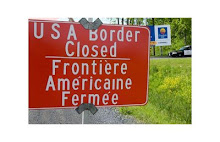
A partner in the prominent "Indian Country" law firm, Dewey, Cheatum and Howe(sorry Car Talk guys), offered his apology after posting an offensive commentary of a Traditional Opening that was offered at a memorial service to the American people in Tucson last week. Paul N. Admiredjackoff, who writes on www.whitepowerlineblog.com, apologized for biting the hand that feeds him. Mr. Admiredjackoff said, "I had no idea that telling people how I really feel about pagan rituals would offend anyone. How could I know? I come from a city that has a professional football team called the Redskins and I'll have you know I support these Redskins faithfully". He went on to express his sincere regret for causing any problems for his partners and offered his hope that any clients who would be considering dropping his firm would "grow a pair and face the facts that you are better off with us on your side than against you". A statement from Dewey, Cheatum and Howe also expressed regret for Mr. Admiredjackoff's comments. The statement reads; "It has never been the policy of this firm to say the type of things, Mr. Admiredjackoff has taken responsibility for, in public". The firm also expressed their sincere hope that, "Everyone can just forget about all this nonsense and get back to restoring Indians back to their rightful place as tools for the gaming industry".
Saturday, January 15, 2011


Tuesday, January 4, 2011
A Review of "Toward The Setting Sun" by Brian Hicks

Last month I received an email from Grove/Atlantic Inc., a publishing company. The representative expressed an interest in getting a new book they were releasing out to bloggers. GA sent me a copy and I promised to read it and give a review.
Brian Hicks pulls off telling a detailed history, most know little about, without writing a history book. The story of John Ross, the Cherokee people, a ruthless state and a country with no respect for their own laws is laid out more like a novel than a lesson. Hicks gives a fair and compelling account of the divisions that developed within the Cherokee Nation as the pressure from Georgia and Washington became unbearable. The Andrew Jackson portrayed here creates a circumstance where a reader will have a difficult time gazing on the face on a twenty dollar bill without feeling a certain level of contempt. The story leads up to one of the most tragic events in the history of Native interaction with the United States, the Trail of Tears. The Cherokee story is more than just an account of bad US policies that include extermination, assimilation, removal and termination. It is a story of outright theft, breach of contract and lies from those that children, to this day, are taught to idolize. Mr. Hicks paints the Cherokee principal chief, John Ross, as an uncompromising hero of the highest character who has traitors undermining his authority at the most critical time for the Cherokee Nation.
I recommend the book highly. This story was by no means unique to the Cherokees. It played out over and over again through the entire 19th century and in many ways continues today. This is precisely why "Toward The Setting Sun" is important. I do find that Mr. Hicks seemed to rush the ending of the book and in his loyalty to the honor of John Ross neglected to address the Chief's dream of Cherokee statehood in the controversial light it was truly received. Mr. Hicks also seemed to gloss over John Ross' support of slavery and in particular how it was that while an entire third of the Cherokee population perished on the forced march to Oklahoma that he managed to have the resources to get his 50 slaves moved with little trouble. In spite of a few short comings, "Toward The Setting Sun" should be read to provide, not only historical context for Native life at the time, but context for the lives, positions and views that Native people still have. Read this book.
Friday, December 17, 2010
Execution 150 Years Ago Spurs Calls for Pardon

By ROBERT K. ELDER
Published: December 13, 2010, New York Times
Published: December 13, 2010, New York Times
MANKATO, Minn. — On Dec. 26, 1862, thirty-eight doomed Dakota Indians wailed and danced atop the gallows, waiting for the trapdoors to drop beneath them. The square scaffold, built here to accommodate the largest mass execution in United States history, swayed under their weight.
“It seemed that the purpose of the singing and dancing was only to sustain each other in their last ordeal,” a witness observed. “As the last moment rapidly approached, they each called out their name and shouted in their native language: ‘I’m here! I’m here!’ ”
Thirty-seven of the men were among the “most ferocious” followers of the Dakota leader Little Crow, according to the federal government. They stood accused of killing approximately 490 settlers, including women and children, in raids along the Minnesota frontier.
But one man, historians say, did not belong there. A captured Dakota named We-Chank-Wash-ta-don-pee, often called Chaska, had had his sentence commuted by President Abraham Lincoln days earlier. Yet on the day after Christmas 1862, Chaska died with the others.
It was a case of wrongful execution, Gary C. Anderson, a history professor at the University of Oklahoma and Little Crow biographer, said last week in an interview. “These soldiers just grabbed the wrong guy,” he said.
Although the story of the mass execution in Mankato is well-known locally, scholars say the case of Chaska — spared by Lincoln, then wrongfully executed — has been long overlooked by the federal government and all but forgotten even by the Dakota.
Now, an effort to keep the story alive is taking root on campuses and even on Capitol Hill as the 150th anniversary of the execution, in 2012, approaches. Commemorative events will include symposiums, museum exhibits, monument re-dedications, book publications and an original symphony and choral production.
“It’s time to talk about it and time for people to know about it,” said Gwen Westerman, a professor of English at Minnesota State University at Mankato and a member of the Dakota who is planning to investigate Chaska’s case and the cultural context of the conflict with a class. She says she is hoping her students can “put together some more pieces of the puzzle.”
“Because there is a historical record” for Chaska’s commutation, Ms. Westerman said, “that’s a good place to start.”
A move to award Chaska (pronounced chas-KAY) a posthumous pardon has drawn some initial support. Before his defeat in November, Representative James L. Oberstar, Democrat of Minnesota, said a federal pardon would be “a grand gesture and one I think our Congressional delegation should support.”
“A wrong should be righted,” he added.
Senator Al Franken, a Minnesota Democrat who sits on the Committee on Indian Affairs, issued a statement last week signaling that he might move the issue forward.
“Senator Franken recognizes that this is a tragic period in history,” said his press secretary, Ed Shelleby. “The senator will continue to look into this incident in the next Congress.”
Tension between the Dakota, historically called the Sioux, and the influx of settlers had been mounting for years before the Civil War, which further strained United States resources, disrupting food and supplies promised to the Dakota in a series of broken peace treaties. One local trader, Andrew Myrick, said of the Indians’ plight, “If they are hungry, let them eat grass.”
Enraged and starving, the tribe attacked and plundered the new state’s settlements. Of the 400-plus Dakota and “mixed blood” men detained by Brig. Gen. Henry Hastings Sibley, 303 were sentenced by a military court to death. But Lincoln found a lack of evidence at most of the tribunals, and he reduced the number of the condemned to 38.
We-Chank-Wash-ta-don-pee’s case was No. 3 and not listed in the execution order handwritten by Lincoln, but his fate may have been the result of mistaken identity. The man he died for was No. 121, identified by Lincoln as Chaskey-don or Chaskey-etay, who had been condemned for murdering a pregnant woman.
But historians say something far more complex may have been responsible for Chaska’s death: rumor. During the raids, Chaska took a white woman, Sarah Wakefield, and her children prisoner — not an uncommon occurrence during the Dakota War.
What was uncommon, however, was Wakefield’s defense of her captor at his military tribunal. Chaska defended her and her children, she said, and kept them from certain death and abuse at the hands of his fellow tribesmen. “If it had not been for Chaska,” Wakefield said, “my bones would now be bleaching on the prairie, and my children with Little Crow.”
One prison chaplain wrote to her after the hanging: “Dear Madam: In regard to the mistake by which Chaska was hung instead of another, I doubt whether I can satisfactorily explain it.”
Wakefield firmly believed that Chaska was executed on purpose, in retaliation for her testimony and in reaction to rumors that she and Chaska were lovers. General Sibley, who appointed the tribunal that convicted Chaska, privately referred to him as Wakefield’s “dusky paramour.”
Wakefield denied any sexual relationship in the booklet she wrote the year after his death, titled “Six Weeks in the Sioux Teepees.” She wrote, “I loved not the man, but his kindly acts."
Some details of the conflict have been willfully buried or forgotten, by both sides of the war. The Dakota conflict came in 1862, which historians have described as Lincoln’s “darkest year” during the Civil War. It was the year the president lost his 11-year-old son, Willie, to typhoid fever. Thousands died on the battlefields at the Battle of Bull Run and at Fredericksburg, as Lincoln fought with his own generals. In large part, the narrative of mass execution in Mankato was lost in the United States’ struggle to preserve the union.
Lincoln himself was distressed at the speed of the military tribunals that condemned 303 men, and his decision to commute most of the sentences was politically dangerous. But he said, “I could not afford to hang men for votes.” The 265 Dakota Indians Lincoln spared from the gallows were either fully pardoned or died in prison.
Modern Mankato, once a prairie outpost, is now a city of 37,000, where a modest downtown struggles for survival, competing against outlying strip malls and chain stores.
The only reminders that 38 Indians died here is a Dakota warrior statue and plaque outside the local library. The location of the actual scaffold is now called Reconciliation Park.
Glenn Wasicunna, a Dakota language teacher and husband of Ms. Westerman, said that for decades, his people would not even drive through Mankato during the day. The place carried too many memories, too much cultural trauma, he said.
“These were our family,” Ms. Westerman added. “These were people my great-grandparents knew. They have a direct effect on who we are.”
Each year on Dec. 26, the annual Mankato memorial run acknowledges those who died in the mass execution. But Wayne Wells, a Dakota language teacher on the nearby Prairie Island reservation, said there would be a range of response to a pardon just for Chaska. Many Dakota, he said, “consider all of them to be innocent martyrs — people who stood up and died for us.”
However, Leonard Wabasha, a local Dakota leader, said a federal pardon for Chaska would “shine a light.”
“It would cause people to read and research into it a little deeper,” Mr. Wabasha said. “It would be a step in the right direction.”
“It seemed that the purpose of the singing and dancing was only to sustain each other in their last ordeal,” a witness observed. “As the last moment rapidly approached, they each called out their name and shouted in their native language: ‘I’m here! I’m here!’ ”
Thirty-seven of the men were among the “most ferocious” followers of the Dakota leader Little Crow, according to the federal government. They stood accused of killing approximately 490 settlers, including women and children, in raids along the Minnesota frontier.
But one man, historians say, did not belong there. A captured Dakota named We-Chank-Wash-ta-don-pee, often called Chaska, had had his sentence commuted by President Abraham Lincoln days earlier. Yet on the day after Christmas 1862, Chaska died with the others.
It was a case of wrongful execution, Gary C. Anderson, a history professor at the University of Oklahoma and Little Crow biographer, said last week in an interview. “These soldiers just grabbed the wrong guy,” he said.
Although the story of the mass execution in Mankato is well-known locally, scholars say the case of Chaska — spared by Lincoln, then wrongfully executed — has been long overlooked by the federal government and all but forgotten even by the Dakota.
Now, an effort to keep the story alive is taking root on campuses and even on Capitol Hill as the 150th anniversary of the execution, in 2012, approaches. Commemorative events will include symposiums, museum exhibits, monument re-dedications, book publications and an original symphony and choral production.
“It’s time to talk about it and time for people to know about it,” said Gwen Westerman, a professor of English at Minnesota State University at Mankato and a member of the Dakota who is planning to investigate Chaska’s case and the cultural context of the conflict with a class. She says she is hoping her students can “put together some more pieces of the puzzle.”
“Because there is a historical record” for Chaska’s commutation, Ms. Westerman said, “that’s a good place to start.”
A move to award Chaska (pronounced chas-KAY) a posthumous pardon has drawn some initial support. Before his defeat in November, Representative James L. Oberstar, Democrat of Minnesota, said a federal pardon would be “a grand gesture and one I think our Congressional delegation should support.”
“A wrong should be righted,” he added.
Senator Al Franken, a Minnesota Democrat who sits on the Committee on Indian Affairs, issued a statement last week signaling that he might move the issue forward.
“Senator Franken recognizes that this is a tragic period in history,” said his press secretary, Ed Shelleby. “The senator will continue to look into this incident in the next Congress.”
Tension between the Dakota, historically called the Sioux, and the influx of settlers had been mounting for years before the Civil War, which further strained United States resources, disrupting food and supplies promised to the Dakota in a series of broken peace treaties. One local trader, Andrew Myrick, said of the Indians’ plight, “If they are hungry, let them eat grass.”
Enraged and starving, the tribe attacked and plundered the new state’s settlements. Of the 400-plus Dakota and “mixed blood” men detained by Brig. Gen. Henry Hastings Sibley, 303 were sentenced by a military court to death. But Lincoln found a lack of evidence at most of the tribunals, and he reduced the number of the condemned to 38.
We-Chank-Wash-ta-don-pee’s case was No. 3 and not listed in the execution order handwritten by Lincoln, but his fate may have been the result of mistaken identity. The man he died for was No. 121, identified by Lincoln as Chaskey-don or Chaskey-etay, who had been condemned for murdering a pregnant woman.
But historians say something far more complex may have been responsible for Chaska’s death: rumor. During the raids, Chaska took a white woman, Sarah Wakefield, and her children prisoner — not an uncommon occurrence during the Dakota War.
What was uncommon, however, was Wakefield’s defense of her captor at his military tribunal. Chaska defended her and her children, she said, and kept them from certain death and abuse at the hands of his fellow tribesmen. “If it had not been for Chaska,” Wakefield said, “my bones would now be bleaching on the prairie, and my children with Little Crow.”
One prison chaplain wrote to her after the hanging: “Dear Madam: In regard to the mistake by which Chaska was hung instead of another, I doubt whether I can satisfactorily explain it.”
Wakefield firmly believed that Chaska was executed on purpose, in retaliation for her testimony and in reaction to rumors that she and Chaska were lovers. General Sibley, who appointed the tribunal that convicted Chaska, privately referred to him as Wakefield’s “dusky paramour.”
Wakefield denied any sexual relationship in the booklet she wrote the year after his death, titled “Six Weeks in the Sioux Teepees.” She wrote, “I loved not the man, but his kindly acts."
Some details of the conflict have been willfully buried or forgotten, by both sides of the war. The Dakota conflict came in 1862, which historians have described as Lincoln’s “darkest year” during the Civil War. It was the year the president lost his 11-year-old son, Willie, to typhoid fever. Thousands died on the battlefields at the Battle of Bull Run and at Fredericksburg, as Lincoln fought with his own generals. In large part, the narrative of mass execution in Mankato was lost in the United States’ struggle to preserve the union.
Lincoln himself was distressed at the speed of the military tribunals that condemned 303 men, and his decision to commute most of the sentences was politically dangerous. But he said, “I could not afford to hang men for votes.” The 265 Dakota Indians Lincoln spared from the gallows were either fully pardoned or died in prison.
Modern Mankato, once a prairie outpost, is now a city of 37,000, where a modest downtown struggles for survival, competing against outlying strip malls and chain stores.
The only reminders that 38 Indians died here is a Dakota warrior statue and plaque outside the local library. The location of the actual scaffold is now called Reconciliation Park.
Glenn Wasicunna, a Dakota language teacher and husband of Ms. Westerman, said that for decades, his people would not even drive through Mankato during the day. The place carried too many memories, too much cultural trauma, he said.
“These were our family,” Ms. Westerman added. “These were people my great-grandparents knew. They have a direct effect on who we are.”
Each year on Dec. 26, the annual Mankato memorial run acknowledges those who died in the mass execution. But Wayne Wells, a Dakota language teacher on the nearby Prairie Island reservation, said there would be a range of response to a pardon just for Chaska. Many Dakota, he said, “consider all of them to be innocent martyrs — people who stood up and died for us.”
However, Leonard Wabasha, a local Dakota leader, said a federal pardon for Chaska would “shine a light.”
“It would cause people to read and research into it a little deeper,” Mr. Wabasha said. “It would be a step in the right direction.”
Saturday, December 11, 2010
The Kanienkehaka Kanonhsesne Condemns the Saint Regis Tribal Council
The following is a letter from the Men's Council of the Longhouse addressing the treasonous actions of the Saint Regis trustees toward the community of Ganienkeh.
Based upon the recent agenda of the Saint Regis Mohawk Tribal Council, the topic of the Kanienkehaka Territory of Ganienkeh remains as pressing as ever to the state-recognized trustee “Chiefs”.
To be clear, there is nothing new about tribal discomfort with the free-thinking of the variety that gave birth to the Ganienkieh settlement(s).
In October of 2010, two letters were sent by the Tribal Council to the state of New York. The first letter was coyly written and only hinted at the Ganienkeh Territory. The second letter was more telling. An impressive dossier of testimony accompanies this letter, citing Big Apple articles and the investigative findings of the Tribal Gaming Commission, which serve to justify the immediate goal of tarring Ganienkeh.
At the November 2010 Saint Regis Mohawk Tribal meeting, a woman asked the meeting Chairman, Tribal Chief Mark Garrow, if he was jealous of the people of Ganienkeh, since what he did by signing the letter with fellow Tribal Chief Randy Hart (Chief Monica Jacobs abstained from signing either letter) showed his true feelings towards that group of the People of the Flint. Chief Garrow made a point to remark during the meeting that he represented the people who elected him.
It has been stated by the Saint Regis Mohawk Tribal Council that the action taken was not against Ganienkeh, but rather on behalf of the tribal membership, specifically to stem the flow of Tribal gaming revenue to the state of New York for failure to protect gaming compact exclusivity that was agreed upon as a stipulation by the state to allow the Tribe to operate the Akwesasne Mohawk Casino under a gaming compact.
Yet many in attendance at the November 2010 Tribal monthly meeting clearly stated that the Tribal Council did not consult with Tribal members before electing to take this deliberate action of notifying the state of Ganienkeh Territory gaming activities, that the action was both treasonous and “an act of war”, and that many People of the Flint were packed and ready to move out to defend Ganienkeh from state (and tribal) oppression.
Nothing is new here to those with memories of past Tribal Council actions pertaining to Ganienkeh. When Moss Lake, located near Utica, was settled as the “first” Ganienkeh, and this former Girl Scout campground was the point of negotiations between Ganienkeh spokespeople and representatives from the New York Governor’s office, a letter dated November 25, 1974 arrived in Albany from the Saint Regis Mohawk Tribal Council. Signed by Chiefs Leonard Garrow (father of present trustee Mark Garrow), Rudolph Hart (father of present trustee Randy Hart) and Charlie Terrance, the letter objected to the reclamation of the state-owned property and called for the assertion of state jurisdiction to remove the Ganienkeh settlement. There seems to be no hesitation to Tribal Councils of any era to call in their pay-masters when the sledding gets tough. Nor is anyone riding a white horse in that posse.
To many, Ganienkeh represents freedom. To others, the Saint Regis Mohawk Tribal Council represents an attempt to assert control. It may just be that the trustee eyes are bigger than their stomachs allow.
To be clear, there is nothing new about tribal discomfort with the free-thinking of the variety that gave birth to the Ganienkieh settlement(s).
In October of 2010, two letters were sent by the Tribal Council to the state of New York. The first letter was coyly written and only hinted at the Ganienkeh Territory. The second letter was more telling. An impressive dossier of testimony accompanies this letter, citing Big Apple articles and the investigative findings of the Tribal Gaming Commission, which serve to justify the immediate goal of tarring Ganienkeh.
At the November 2010 Saint Regis Mohawk Tribal meeting, a woman asked the meeting Chairman, Tribal Chief Mark Garrow, if he was jealous of the people of Ganienkeh, since what he did by signing the letter with fellow Tribal Chief Randy Hart (Chief Monica Jacobs abstained from signing either letter) showed his true feelings towards that group of the People of the Flint. Chief Garrow made a point to remark during the meeting that he represented the people who elected him.
It has been stated by the Saint Regis Mohawk Tribal Council that the action taken was not against Ganienkeh, but rather on behalf of the tribal membership, specifically to stem the flow of Tribal gaming revenue to the state of New York for failure to protect gaming compact exclusivity that was agreed upon as a stipulation by the state to allow the Tribe to operate the Akwesasne Mohawk Casino under a gaming compact.
Yet many in attendance at the November 2010 Tribal monthly meeting clearly stated that the Tribal Council did not consult with Tribal members before electing to take this deliberate action of notifying the state of Ganienkeh Territory gaming activities, that the action was both treasonous and “an act of war”, and that many People of the Flint were packed and ready to move out to defend Ganienkeh from state (and tribal) oppression.
Nothing is new here to those with memories of past Tribal Council actions pertaining to Ganienkeh. When Moss Lake, located near Utica, was settled as the “first” Ganienkeh, and this former Girl Scout campground was the point of negotiations between Ganienkeh spokespeople and representatives from the New York Governor’s office, a letter dated November 25, 1974 arrived in Albany from the Saint Regis Mohawk Tribal Council. Signed by Chiefs Leonard Garrow (father of present trustee Mark Garrow), Rudolph Hart (father of present trustee Randy Hart) and Charlie Terrance, the letter objected to the reclamation of the state-owned property and called for the assertion of state jurisdiction to remove the Ganienkeh settlement. There seems to be no hesitation to Tribal Councils of any era to call in their pay-masters when the sledding gets tough. Nor is anyone riding a white horse in that posse.
To many, Ganienkeh represents freedom. To others, the Saint Regis Mohawk Tribal Council represents an attempt to assert control. It may just be that the trustee eyes are bigger than their stomachs allow.
Signed, 12-09-2010
Men’s Council of the Kanienkehaka Kaianerehkowa Kanonhsesne (People of the Longhouse)
Turtle Clan Representative – Sakoieta
Wolf Clan Representative - Rarahkwisere
Bear Clan Representative – Kanaretiio
Men’s Council of the Kanienkehaka Kaianerehkowa Kanonhsesne (People of the Longhouse)
Turtle Clan Representative – Sakoieta
Wolf Clan Representative - Rarahkwisere
Bear Clan Representative – Kanaretiio
Wednesday, November 24, 2010

Monday, November 22, 2010
Not Another Post About The "Real" Meaning Of Thanksgiving
This is the time of the year when a litany of opinions, lectures and down right scoldings will be offered up about "Thanksgiving". If the Western civilization had to appropriate one of our festivals and rewrite history to kick off their holiday shopping season so be it. I am more concerned about what we do. I am not talking about turkey or spending a quarter of our salary the day after gorging ourselves. I am thinking more about our direction and commitment to securing our cultural and political distinction.
The last time our people came together after a period of conflict between us was when five regions of our people brought their 49 families together committing their titles with that of Tadadaho to create the Kaianerehkowa. The great peace enjoyed by the Great Path of Goodness was to be recited every year to all of our people in all our territories and would be recited at a great convention for all of our people every five years. We need to once again come to a unified understanding of what bound us together before the clash of the European culture would disrupt our people so. Religion, disease, war and the growth of the capitalist empire have left many of our people struggling with their sense of identity. Even "Indian" religions have clouded the waters to such an extent that we only look back to what a handful of generations have offered up as a definition of what it means to be Ohnkwe Ohnwe or Haudenosaunee.
It is time to look at the path worn by the millions of feet that walked this land before us. The Kaianerehkowa has not been properly examined or certainly followed in over 200 years. Generations of egotistical men, many of them carrying some of those 50 titles, have moved so far off that path that the generations that followed lost their way back. I have no use for examining the paths followed by generations of oppressed people, a path of survival. I would rather return to the path that advanced our people rather than the one used to desperately hang on to shadows of who we were. We need to relearn the Kainerehkowa and let it be a priority.
If our people can brandish the Hiawentha Belt on everything from flags to body art, if we can treat our Longhouses like churches, if we can gather to celebrate "treaty commemorations", if we can wear our "Indianess" on our sleeves; then why can't we learn the one thing that separated us and distinguished us from all other men. The Kaianerehkowa is not a gift from the "Creator". It is the path that honors Creation. It is not "like" anything that man has created. It is not a supernatural phenomenon but rather a natural one. In a world where power, authority and wealth was wrestled from the weak or ignorant to be placed with the privileged few, the Kaianerehkowa was the only model that proved liberty was not chaos and that authority and dominion over others was not required for order and peace. If we can adopt all of these false "traditions" that we claim to be a part of our "culture" then how about reclaiming the lost tradition of a yearly recital. Perhaps then the festivals our people celebrated will begin to have real meaning and a genuine return to a higher quality of life can begin.
Thursday, November 4, 2010
Governor Cuomo? It has a familiar ring to it.
For many of us that have been putting up the resistance to New York State as they encroach on Native lands and liberties of Native people, we always look at these new governors with more questions than expectations. Will Andrew take advice from his dad on Native issues? And will his advice come from the Mario that showed skill and integrity in the handling of the Ganienkeh stand off or from the State's Chief Executive that was responsible for "Gallant Piper"? The senior Cuomo was the first governor to tackle the "problem" of Native retailers marketing their regulatory advantages. He took a State licensed wholesaler all the way to the Supreme Court to prove he had authority over him and laid the groundwork as he and future administrations who would attempt to choke off our supply or tax our wholesale purchases.
It turns out that our resistance convinced the tough talking Republican that replaced him to do a complete about-face on the subject. As it would turn out, George Pataki would prove to be the most diplomatic State executive we have faced and properly addressed the issue politically rather than through force or courts. It is worth noting that Governor Pataki paid no political cost for respecting Native sovereignty.
So now a second generation Governor takes the helm. This one faces challenges the others couldn't have dreamed of; anemic revenue from Wall Street and a billion dollars a week going out to Medicaid. Even the conservative estimates have New York facing a $10 billion deficit next year. The question is: will Cuomo the younger do as others have and use us as a distraction from his real issues or will he ignore the racist clamor from morons like US Congressman, Peter King and his new found Republican majority which will now put him as a chairman of the Homeland Security Committee? How close will this one push us to the brink of an all out conflict before he becomes another humbled governor.
Wouldn't it be a pleasant surprise to start out with one of these guys as a human being instead of so much of our energy going into forcing him to be one?
Saturday, October 23, 2010
Seneca Nation Attorneys' Weak Showing in Court Shows Why We Shouldn't Be There
By failing to challenge the New York State's authority to interfere with Native commerce in their so-called fight against the State, Seneca Nation attorneys have left many, including the judge in the case, believing that the Seneca Nation has conceded its sovereignty to the State. At this point the entire legal fight has hung on the SNI fighting to keep State wholesalers in the Native tobacco business. Their argument is not that we cannot be compelled to collect tax for the State but rather the method the State is attempting to employ is too burdensome.
Now, I am one of those that believe it is wrong for us to wrap ourselves up in a bunch treaties to defend ourselves. Unlike the "Honor Indian Treaty" crowd, I reject the notion that our territories were created by them and that we are, likewise, defined by them. Our sovereignty is our birthright and was certainly never gifted to us through the words of swindling politicians. The few passages from these over lauded contracts of theft that refer to "free use and enjoyment" or lands that will never be claimed by the U.S. or even those that mention taxes specifically do not encompass the extent or limits of our rights and authority.
Having said that does not mean that we should be afraid to argue against the State's authority. In the SNI's briefs in Federal court, the Nation made clear "it is not advancing the argument in this litigation that its specific treaty rights exempt it and its members from the Supreme Court's generic rule that the State may tax such sales [cigarette] to non-Indians." But they not only shied away from "treaty rights", they failed to reject the State's authority at all. As such, Richard Arcara, the judge in the case, determined that the Nation was conceding this position and wrote in his ruling that "The Seneca Nation expressly acknowledges that, as a general principle, New York State has authority to require reservation retailers to collect excise taxes on sales to non-Indians." I'm not sure that the Seneca Nation has actually conceded this point but only challenging the manner in which the State forces us to collect tax and not even addressing whether they had the right to do it in the first place certainly suggests so.
The whole premise for a state to impose a "minimal burden" on tribes to collect taxes for the state is born out of a few cases heard in Federal Court in other states against Native people with views and circumstances different from ours. There are dozens of issues that make those cases inappropriate for use or justification for New York State, not to mention the general problem we have with anyone believing they can violate our sovereignty simply because a court let another state violate the people of another territory. Not one Wampum Belt needed to be dusted off for this fight. The courts, however, certainly could have seen fit on their own to cite treaties, that their forefathers wrote, to undo this mess. After all these "treaties" are their laws. The belts are ours.
All this points to the undeniable fact that if we allow these issues to be reduced to a matter of state or federal laws, legal issues, we have already conceded certain authority. These are political issues. This is not a question of who has authority over who, because we concede no authority to other controlling interests. That is the definition of sovereignty. In the instance that the freedom of one infringes on the freedom of another is where diplomacy steps in.
When we enter their system, we go in with the risk of losing. The legal wizards in this case that believed they could risk nothing if they just avoided certain issues certainly failed to prove their point. In fact they failed to prove any point except, possibly, mine.
Wednesday, October 20, 2010

Saturday, October 16, 2010
Again
Yesterday a cloud blocked the sun
I’m hurting so bad inside its hard to explain
I could tell in the dr’s eyes when he walked in the door that things aren’t gonna be normal anymore
And somehow I always end up with a losing score
All I could think of is my wife and kids and how all I want is the best for them
I put my head down as my wife cried she is truly my best friend
I have to fight I can't let this pull me down
My emotions are mixed as I tread these tears so I don’t drown
To my wife the strongest woman I know
The love of my life she makes me whole
She’s there for me like the sun
And in the dark she’s the stars in the sky
With her I will never turn and run
I’m truly lucky to be her guy
Again we are called to fight this
Again cancer is in our life
Again the chemo bags will drip
Again I will feel sick
Again I will lose my taste
Again my hair will lose its place
Again I will be weak
Again my soul will seek
Again I will have to be away from my family
Again WE will fight
Again WE WILL WIN
Lesten James White-Pigeon
Tuesday, October 12, 2010
The LJWP Fund

Lesten White-Pigeon is Seneca from the Seneca Nation Territory of Cattaraugus. He is 29 years old with a wife, Jessica and two children; Lesten James Jr. age 4 and Julia Rose 17 months. He has been battling Osteosarcoma for more than a year. He lost his leg a year ago last summer but the cancer spread to his chest and lungs. He plans to enlist the help of M. D. Anderson, a specialized cancer hospital in Houston, Texas to join with the Roswell Cancer Institute in Buffalo that is now treating him. The fund raising effort is to both help the family as they enter the holiday season and to assist in the cost associated with out of town treatment. Make checks payable to Lesten White-Pigeon and send them to The LJWP Fund, PO Box 93, Versailles, NY 14168. Thanks for your support.

Sunday, October 3, 2010

Subscribe to:
Posts (Atom)






![-[]-[]-/\-[]-[]-](https://blogger.googleusercontent.com/img/b/R29vZ2xl/AVvXsEjLoXmKO8PJVQ5pZ2q7GX7nFKw8H2tb28dxt-o10FUBNtOGszWhWoLB7tgjtMgtISpuSxNW3fcDxfuSS2DqojsdjNJ1lVggyUS374PnzsDbOhk4ukvtTunFQcyfkckZeBzcLbri4LDYN_E/s214/29-03-A-voice-from-the-Akw-.jpg)